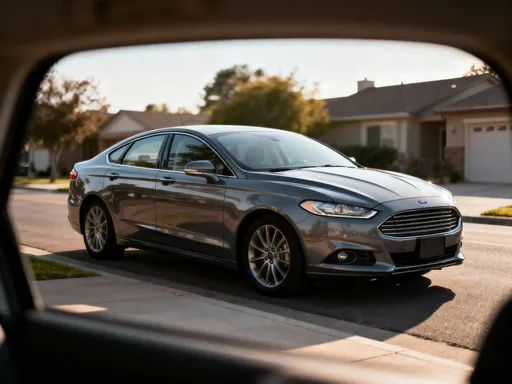
How I Nailed My Car Insurance Game Without Overpaying
You’re not alone if you’ve ever felt ripped off by car insurance. I was too—until I started treating it like a smart financial move, not just a monthly bill. What if you could lower your premium, boost your coverage, and actually *get* what you pay for? It all starts with how you assess the risks. Here’s how I cracked the code, and how you can too—without stress or guesswork. This isn’t about gaming the system or cutting corners. It’s about understanding the mechanics of risk, value, and protection so you’re not just paying blindly. Car insurance, when managed wisely, becomes less of a burden and more of a shield—one that fits your life, not just your vehicle.
The Hidden Cost of Ignoring Risk Assessment
Most drivers treat car insurance as a fixed monthly expense, like electricity or internet. They pay the bill, file a claim if needed, and rarely think about it again—until renewal time, when they groan at the new rate. But this passive approach comes at a steep cost. Ignoring your personal risk profile means you're likely overpaying or, worse, underprotected when an accident happens. The truth is, every driver carries a unique risk footprint shaped by habits, location, and lifestyle. Failing to assess it properly turns insurance from a strategic safety net into a financial blind spot.
Consider two drivers with the same car and insurer. One lives in a quiet suburban neighborhood, commutes ten miles daily, and avoids driving after dark. The other lives in a high-traffic urban zone, drives over 50 miles a day, and frequently travels late at night. Despite identical policies, their actual risk levels are vastly different. Yet, without self-assessment, both may pay the same premium—meaning one is overcharged, and the other may not have enough coverage when it matters. This imbalance isn’t just unfair; it’s financially inefficient.
The real danger lies in treating insurance as a one-size-fits-all product. A driver who recently moved to a higher-crime area may not realize their theft risk has increased. Someone who now works from home may still be paying for high-mileage coverage. These mismatches add up. Studies show that drivers who don’t reassess their risk factors after life changes pay, on average, 15–25% more than necessary. That’s hundreds of dollars lost annually—not to better protection, but to outdated assumptions.
Conversely, underestimating risk can be even costlier. A driver with minimal liability coverage in a state with high litigation rates may face personal financial ruin after a serious accident. Insurance isn’t just about covering car repairs; it’s about protecting your assets, savings, and future income. Without a clear understanding of exposure, you’re gambling with more than just your vehicle. A simple risk self-audit—reviewing driving patterns, location safety, and vehicle use—can reveal where you’re overpaying and where you’re exposed. That awareness is the first step toward smarter, more economical protection.
Know Your Real Risk Profile—Beyond the Basics
Insurance companies rely on complex algorithms to calculate premiums, but you don’t need a data science degree to understand your own risk. In fact, personal insight often beats cold data. Your real risk profile goes beyond age, gender, and credit score—it’s shaped by daily choices and life patterns that insurers may not fully capture. By reflecting honestly on your habits, you can build a clearer picture of your exposure and use it to negotiate better terms or adjust your coverage accordingly.
Start with your driving routine. How many miles do you log each year? The national average is around 13,500, but if you’re below 8,000, you may qualify for low-mileage discounts. Do you drive mostly during daylight hours, or are you often on the road at night? Late-night driving increases accident risk, and acknowledging this can help you decide whether higher liability limits are wise. Have you had any claims or violations in the past three to five years? Even minor incidents can affect your risk rating, but a clean record since then may make you eligible for safe driver rewards.
Your location also plays a crucial role. Urban areas typically have higher rates of accidents, theft, and vandalism, which drives up premiums. But if you’ve moved to a safer neighborhood or now park in a secure garage, your risk has decreased—even if your insurer hasn’t adjusted your rate. Similarly, if you live in a region prone to severe weather, comprehensive coverage becomes more valuable, as hail, flooding, or fallen trees can cause significant damage.
Another often-overlooked factor is credit behavior, where permitted by law. In many states, insurers use credit-based insurance scores to predict claim likelihood. While controversial, these scores are based on payment history, debt levels, and credit longevity—not income or assets. Improving your credit health can, over time, lead to lower premiums. But more importantly, understanding how it affects your rate empowers you to take action. Paying bills on time, reducing credit card balances, and avoiding frequent credit applications can gradually improve your standing.
The key is self-awareness. Instead of accepting your insurer’s risk label, take ownership of it. Ask yourself: Am I driving less than I used to? Have my routes become safer? Is my car older and worth less? These reflections aren’t just useful for renewal time—they form the foundation of a proactive insurance strategy. When you know your real risk, you’re no longer at the mercy of generic pricing. You can advocate for fairer rates, choose appropriate coverage, and avoid paying for protection you don’t need.
Coverage That Fits Your Life, Not Just Your Car
Too many people keep the same insurance policy for years, assuming that what worked when they bought their car still works today. But life changes—jobs, family status, income, and even driving habits evolve. Your insurance should evolve with it. A policy that once made sense for a single driver with a new car may be completely mismatched for a parent with an older vehicle and a growing savings account. Tailoring your coverage to your current reality isn’t just smart—it’s financially responsible.
Take liability coverage, for example. This protects you if you cause injury or property damage to others. State minimums are often too low to cover serious accidents. A driver with substantial savings or home equity should consider higher limits—$300,000 per person, $500,000 per accident, or even umbrella coverage. Without it, a single lawsuit could wipe out years of financial progress. On the other hand, a young driver with no assets might prioritize higher collision coverage while accepting lower liability, knowing their exposure is limited.
Collision and comprehensive coverage are another area for customization. Collision covers damage from accidents, while comprehensive covers non-collision events like theft, fire, or weather damage. If your car is five or more years old and worth less than ten times your annual premium, dropping collision might make sense. But if you live in a high-theft area or frequently park on the street, keeping comprehensive could save you thousands in unexpected losses.
Consider a real-life example: Sarah, a 42-year-old mother of two, drives a seven-year-old SUV. She works from home three days a week and rarely exceeds 7,000 miles a year. Her car is paid off and worth about $12,000. She has a healthy emergency fund and owns her home. By reviewing her policy, she realized she was still carrying full collision coverage at a $500 deductible. After calculating that she could absorb minor repair costs herself, she raised her deductible to $1,000 and saved $280 a year. She kept comprehensive coverage due to frequent hailstorms in her area. She also increased her liability limits to protect her home equity. The result? Better protection where it mattered, lower costs where it didn’t.
Customization isn’t about cutting costs at all costs—it’s about aligning coverage with actual needs. A single driver with a leased car needs different protection than a retiree with a paid-off sedan. A freelancer with irregular income might value accident forgiveness more than a stable earner. By matching your policy to your life stage, you gain both security and efficiency. Insurance becomes not just a legal requirement, but a personalized financial tool.
The Quote Comparison Trap (And How to Avoid It)
Everyone knows the advice: shop around for the best rate. But comparing car insurance quotes isn’t like comparing gas prices. A lower premium doesn’t always mean better value. In fact, chasing the cheapest quote can leave you dangerously underinsured when you need help most. The real cost of a low-priced policy often reveals itself only after an accident—when you discover exclusions, slow claims processing, or inadequate coverage limits.
The problem starts with how people compare quotes. Most focus solely on the bottom-line price, ignoring what’s behind it. One insurer may offer a $900 annual rate, while another charges $1,200. At first glance, the savings seem clear. But dig deeper: Does the cheaper policy have a $1,000 deductible versus $500? Does it exclude rental car coverage or offer limited roadside assistance? Is the customer service rated poorly for claims handling? These differences can erase any savings when a real incident occurs.
Consider two policies with identical premiums but different structures. Policy A offers $100,000 in bodily injury liability per person, while Policy B offers $300,000. In a state where average injury settlements exceed $200,000, the lower limit could leave you personally liable for the difference. That $1,200 policy with higher limits may actually be the cheaper option in the long run—if you ever face a major claim.
To compare fairly, you must evaluate coverage, not just cost. Start by standardizing the variables: ensure each quote includes the same liability limits, deductibles, and add-ons like uninsured motorist or rental reimbursement. Then, research the insurer’s reputation. The National Association of Insurance Commissioners (NAIC) publishes complaint indexes that show how frequently customers file grievances. A company with a low rate of complaints is more likely to handle claims fairly and promptly.
Also, consider financial strength. Rating agencies like A.M. Best or Standard & Poor’s assess insurers’ ability to pay claims. A company with an A+ rating is more reliable than one with a B or lower, especially during widespread events like natural disasters. A slightly higher premium from a financially stable insurer is often worth the peace of mind.
Finally, read the fine print. Some policies exclude certain types of damage or impose strict conditions for coverage. For example, a discount for home ownership might vanish if you rent out a room. A “safe driver” discount could be revoked for a single late payment. Transparency matters. The goal isn’t to find the cheapest price, but the best value—a policy that balances cost, coverage, and reliability.
Discount Hacks That Actually Work
Insurers advertise dozens of discounts—safe driver, multi-policy, low mileage, good student, telematics, loyalty, and more. But not all deliver real savings. Some are marketing tools that apply only under narrow conditions, while others can cut your premium by 15% or more. Knowing which discounts are worth pursuing—and how to maximize them—can make a meaningful difference in your annual cost.
The most reliable discounts are those tied to verifiable behavior. The **safe driver discount** is common and valuable, typically offering 10–25% off for five years without accidents or violations. If you qualify, it’s essentially free money. Similarly, the **multi-policy discount**—bundling auto with home or renters insurance—can save 15–20%. But don’t assume bundling is always cheaper. Some insurers inflate home rates to make the bundle seem attractive. Always compare the bundled price to buying policies separately.
The **low-mileage discount** is often overlooked. If you drive less than 7,500 miles a year, you may qualify. This is especially relevant post-pandemic, with more people working remotely. Simply informing your insurer of reduced driving can trigger a rate adjustment—sometimes with no proof required.
Telematics programs, like usage-based insurance (UBI), are growing in popularity. These use a mobile app or plug-in device to track driving habits—speed, braking, time of day. Safe drivers can save 20–30%. But they require consent to monitoring, which some find invasive. If privacy isn’t a concern and you drive carefully, the savings can be substantial. However, poor scores can lead to higher rates, so only enroll if you’re confident in your habits.
Loyalty discounts are mixed. Some insurers reward long-term customers with 5–10% off, but others quietly raise rates over time, negating any benefit. Research shows that customers who switch insurers every few years often pay less than loyal ones. Loyalty has value, but not at the cost of overpaying.
Finally, don’t overlook unadvertised perks. Call your insurer and ask, “Are there any discounts I might qualify for?” You might learn about a claim-free bonus, paperless billing credit, or affiliation discount through your employer or alumni group. These small savings add up. The key is to be proactive—not passive. Discounts won’t always be offered automatically. You have to ask.
When to Switch—and When to Stay Put
Loyalty in insurance has its perks. Long-term customers may receive retention offers, faster claims processing, or personalized service. Some insurers reward tenure with incremental discounts or forgiveness for minor lapses. But staying with the same company year after year can also mean missing out on better deals elsewhere. The question isn’t whether to be loyal, but when loyalty pays—and when it costs.
Consider this: insurance rates are not static. They change based on claims history, market conditions, and underwriting models. A company that gave you a great rate three years ago may now be one of the most expensive options. Industry data shows that customers who switch insurers save an average of $300–$500 annually. Yet, many stay put out of convenience or fear of gaps in coverage.
Switching isn’t risk-free. A new insurer may have different claims processes, longer wait times, or less flexible policies. There’s also the hassle of updating registration and lender information, especially if you’re leasing or financing. But with proper planning, these challenges are manageable. The best time to switch is at renewal—when you can cancel the old policy the day the new one starts, avoiding overlap or lapses.
So, when does switching make sense? First, if your premium has increased significantly without a change in your risk profile. Second, if you’ve improved your driving record and want to take advantage of better rates. Third, if a competitor offers a substantially better package—lower price, higher limits, or superior service. Fourth, if you’ve had a negative claims experience and no longer trust your current provider.
On the other hand, staying put can be wise if you’ve built a positive relationship, especially if you’ve filed claims successfully. Some insurers honor long-term customers with faster payouts or more lenient terms. If you’re satisfied and your rate is competitive, there’s no need to leave.
The decision should be data-driven. Every 18–24 months, get 3–5 quotes from other insurers, using the same coverage levels. Compare not just price, but service quality and financial strength. If another company offers a clearly better value, switch. If not, stay. The goal isn’t constant churn, but informed choice.
Building a Smarter Insurance Habit
Car insurance isn’t a one-time decision. It’s an ongoing financial habit—one that should be reviewed and refined regularly. Just as you monitor your budget, health, or retirement savings, your insurance policy deserves annual attention. Life changes, and so should your coverage. By making risk assessment a routine, you avoid surprises, maintain optimal protection, and keep costs in check.
Start with a simple annual review checklist. First, assess life changes: Did you move? Change jobs? Add a driver? Buy or sell a car? Each can affect your risk and rates. Second, re-evaluate your deductibles. Can you afford a higher one now, given improved savings? Raising it even $250–$500 can yield noticeable savings. Third, re-shop your quotes. Get at least two new estimates, even if you don’t plan to switch. Knowing your market value keeps you empowered.
Fourth, confirm your discounts. Are you still eligible for all the ones you’re getting? Have you missed any new ones? Fifth, review your coverage limits. Has your car depreciated? Have your assets grown? Adjust liability and physical damage coverage accordingly. Sixth, check your insurer’s financial strength and customer satisfaction ratings. Stability matters when you need to file a claim.
Finally, document everything. Keep a file of policies, renewals, claims, and correspondence. Organized records make comparisons easier and claims smoother. Consider setting a calendar reminder each year—tied to your renewal date—to trigger this review.
Over time, this habit transforms insurance from a chore into a strategic advantage. You stop overpaying for outdated coverage. You stop fearing the renewal notice. Instead, you approach it with confidence, knowing you’re making informed choices. You’re not just saving money—you’re building financial resilience.
Car insurance isn’t just about avoiding disaster—it’s about making smarter financial choices every day. By treating it as a dynamic part of your personal risk strategy, you gain control, save money, and protect what matters most. The real payoff isn’t just in premiums saved, but in confidence earned. You’re no longer at the mercy of confusing policies or rising rates. You’re in the driver’s seat—where you belong.