How I Healed My Body and Mind with Yoga, Meditation, and Ancient Wisdom
For years, I struggled with low energy, stress, and lingering aches—until I discovered the slow, steady power of traditional Chinese medicine, yoga, and meditation. This isn’t about quick fixes. It’s about long-term healing. I tested methods over months, adjusting routines to my rhythm. The changes weren’t instant, but they were real. My sleep deepened, my focus sharpened, and my body began to repair in ways I hadn’t expected. This is my journey—and how it might help yours.
The Breaking Point: When Modern Life Took Its Toll
There was a time when simply getting through the day felt like an accomplishment. Mornings began with a heaviness in the chest, a dull ache behind the eyes, and a sense of exhaustion that no amount of coffee could lift. I was in my early 40s, managing a household, working part-time, and trying to stay present for my family, but I felt increasingly disconnected—from my body, my emotions, and even my own thoughts. The fatigue wasn’t just physical; it seeped into everything. I would forget appointments, misplace keys, and snap at my children over small things. My joints ached with a stiffness that worsened after sitting for too long, and my sleep, though long in duration, left me unrested.
I visited doctors, hoping for answers. Blood tests showed nothing alarming. I was told I was “within normal range,” yet I knew something was off. I tried prescription sleep aids, over-the-counter pain relievers, and even short courses of therapy, but the relief was fleeting. One specialist suggested stress management, another recommended more exercise, and a third hinted that perhaps I was just “getting older.” While aging is a natural process, I refused to believe that constant fatigue and mental fog were simply inevitable. There had to be another way—one that addressed not just symptoms, but root causes.
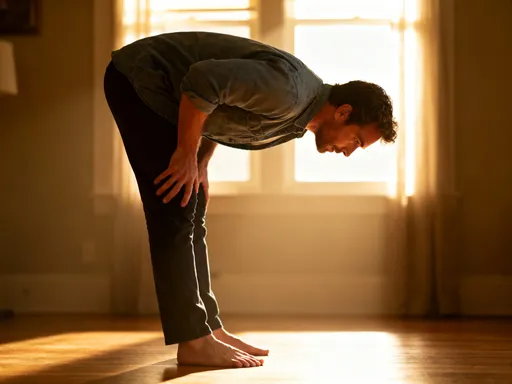
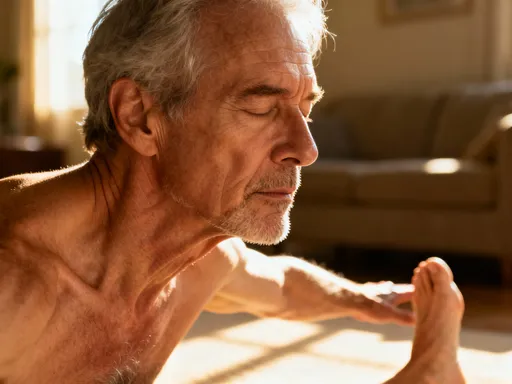
It was during a quiet weekend visit to my sister’s home that I first encountered an alternative perspective. She had recently taken up yoga and was practicing a gentle sequence in her sunlit living room. I watched, curious, as she moved slowly, breathing deeply, her face calm and focused. When she finished, she looked more alert and at ease than I had seen her in years. She invited me to try a few poses, and though my body resisted at first, I felt something shift—subtle, but undeniable. That moment planted a seed. I began to wonder: what if healing wasn’t about suppressing symptoms, but about restoring balance?
Discovering the Balance: Traditional Chinese Medicine Meets Mind-Body Practice
My search led me to the principles of Traditional Chinese Medicine (TCM), a system of healing that has been refined over thousands of years. Unlike Western medicine, which often isolates symptoms and treats them individually, TCM views the body as an interconnected network of energy, organs, and functions. At its core is the concept of qi (pronounced “chee”), the vital life force that flows through the body along pathways known as meridians. When qi is balanced and moving freely, health thrives. When it is blocked, depleted, or imbalanced, discomfort and disease can arise.
One of the first ideas that resonated with me was the concept of yin and yang—opposing yet complementary forces that must be in harmony for optimal health. Yin represents rest, nourishment, and internal reflection; yang embodies activity, movement, and outward expression. I realized that my life had become overwhelmingly yang: constant doing, little resting, endless giving with minimal replenishment. No wonder I felt drained. TCM doesn’t offer a pill to fix this imbalance. Instead, it invites a reevaluation of daily rhythms, diet, and emotional patterns. It suggests that healing begins not with force, but with awareness and gentle correction.
What surprised me was how closely these ideas aligned with yoga and meditation. Though rooted in Indian philosophy, yoga also emphasizes balance—between effort and ease, strength and flexibility, action and stillness. Meditation, too, teaches us to observe without reacting, to create space between stimulus and response. Together, these practices form a holistic approach that doesn’t just treat the body or the mind in isolation, but nurtures the entire being. I began to see my body not as a machine to be pushed, but as a garden to be tended—with patience, care, and consistency.
Yoga That Heals: More Than Just Stretching
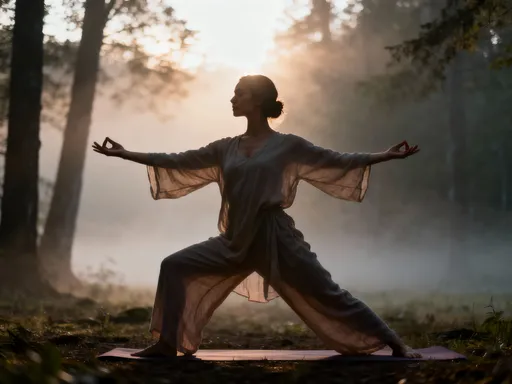
When I first thought of yoga, I imagined advanced poses—people twisting into pretzel shapes on Instagram. I assumed it wasn’t for someone like me, someone with stiff joints and limited flexibility. But as I learned, yoga is not about performance. It’s about presence. I started with gentle Hatha yoga, a style that emphasizes slow movements, conscious breathing, and alignment. Each session began with a simple check-in: How did my body feel today? Where was there tension? What was my energy level? This moment of awareness became as important as the poses themselves.
I focused on foundational postures—Cat-Cow to warm the spine, Child’s Pose to release the lower back, Supported Bridge to open the chest gently. I used props like blocks and bolsters to make poses accessible, not to force my body into shapes it wasn’t ready for. Over time, I noticed changes. My morning stiffness lessened. I could bend to tie my shoes without wincing. My posture improved, not because I was trying to “stand up straight,” but because my muscles were learning to support me more naturally. The real shift, however, was internal. I began to feel more connected to my body, more aware of its signals.
One of the most profound benefits was the effect on my nervous system. Chronic stress had kept my body in a near-constant state of “fight or flight,” with elevated cortisol and shallow breathing. Gentle yoga, especially restorative sequences done in the evening, activated the parasympathetic nervous system—the “rest and digest” mode. I would lie in a supported pose for 10 to 15 minutes, breathing slowly, feeling my heartbeat settle. These moments of deep relaxation were not passive; they were active healing. Research supports this: studies have shown that regular yoga practice can reduce inflammation, improve joint mobility, and enhance sleep quality. But for me, the proof was in the lived experience—less pain, more ease, a growing sense of stability.
Meditation as Medicine: Rewiring Stress Responses
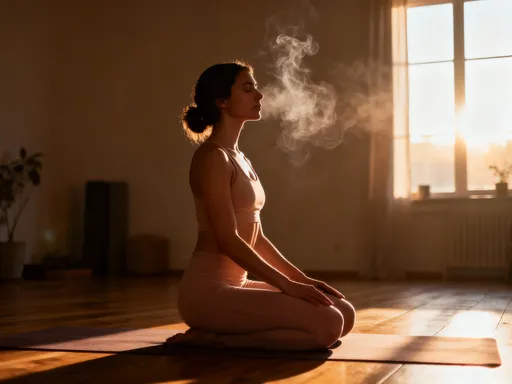
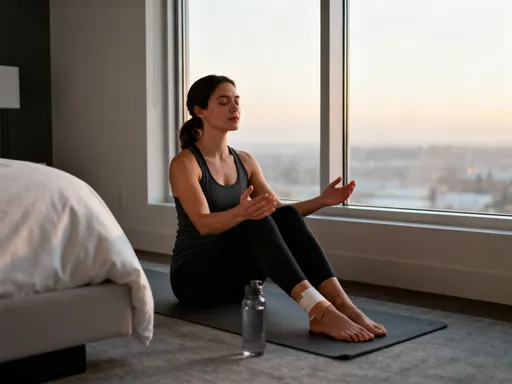
If yoga taught me to listen to my body, meditation taught me to listen to my mind. I began with just five minutes a day, sitting quietly in a corner of my bedroom, focusing on the sensation of my breath moving in and out. My thoughts, of course, wandered—often to to-do lists, worries, or memories. But instead of judging myself, I learned to gently return my attention to the breath. This simple act, repeated daily, began to change my relationship with stress.
Over the weeks, I noticed that I was less reactive. When the phone rang unexpectedly, I didn’t tense up. When my child spilled juice on the floor, I didn’t snap. There was a new space between the event and my response—a space I hadn’t known existed before. This is one of the well-documented effects of meditation: it strengthens the prefrontal cortex, the part of the brain responsible for decision-making and emotional regulation, while reducing activity in the amygdala, the fear center. In practical terms, this means fewer anxiety spikes, better focus, and greater emotional resilience.
I experimented with different styles—mindfulness meditation, body scans, loving-kindness practice—but what mattered most was consistency, not duration or technique. Some days, my mind was busy; other days, I felt calm and clear. The key was showing up, without expectation. I came to see meditation not as a tool to achieve a particular state, but as a way of being with myself—exactly as I was. Over time, this practice became a quiet anchor in my recovery. It didn’t eliminate stress, but it gave me the tools to navigate it with more grace.
Daily Rhythms: Building a Sustainable Routine
One of the biggest challenges in any healing journey is sustainability. I’ve tried intense regimens before—strict diets, hour-long workouts, rigid schedules—but they always fell apart within weeks. This time, I approached change differently. Instead of overhauling my life overnight, I focused on small, manageable habits that could become part of my daily rhythm. I started with just two minutes of breathwork each morning—inhaling for four counts, holding for four, exhaling for six. It took less time than brushing my teeth, yet it set a calm tone for the day.
In the evenings, I added a short sequence of restorative yoga poses, followed by five minutes of meditation. On weekends, I incorporated a simple self-massage with warmed sesame oil, a practice rooted in Ayurveda that helps release tension and nourish the skin and joints. I also paid attention to my daily routine—eating meals at consistent times, reducing screen time before bed, and spending time in nature when possible. These weren’t drastic changes, but together, they created a supportive environment for healing.
The turning point came when these practices stopped feeling like tasks and started feeling like gifts. I no longer asked, “Do I have time for this?” but “How can I start my day without it?” The shift wasn’t about discipline; it was about desire. I began to crave the stillness, the connection, the sense of being grounded. I learned to listen to my body’s needs—some days calling for movement, others for rest—and to honor them without guilt. This is the essence of sustainable self-care: not perfection, but presence; not force, but flow.
Signs of Shift: What Real Progress Looks Like
Healing is not a straight line. There were days when I felt worse—tired, sore, emotionally raw. I had to remind myself that progress isn’t always dramatic. Real change often shows up in quiet ways: I slept through the night without waking. I could walk up the stairs without holding the railing. I found myself pausing before reacting, choosing kindness over frustration. These weren’t milestones I had anticipated, but they mattered deeply.
I began journaling to track these subtle shifts. Each evening, I wrote down three things I noticed—physical, mental, or emotional. At first, the entries were simple: “Less headache today,” “Felt calm during meeting,” “Enjoyed dinner with family.” Over time, the list grew: “Stood in line without feeling anxious,” “Took a deep breath instead of yelling,” “Felt gratitude upon waking.” This practice helped me stay committed, especially during plateaus when nothing seemed to be changing. It reminded me that healing is happening even when it’s invisible.
I also learned to normalize setbacks. There were weeks when I skipped practices due to travel or illness. Instead of berating myself, I returned gently, without judgment. Each time I restarted, it became easier. This flexibility—this self-compassion—became its own form of strength. I realized that resilience isn’t about never falling; it’s about learning how to rise again, with kindness.
A Lifelong Path: Why This Isn’t a Fix, But a Foundation
Today, more than two years into this journey, I no longer think of these practices as a solution to a problem. They are not a remedy I will someday outgrow. They are the foundation of how I live. My energy is steadier. My mind is clearer. My body feels more like home. But the greatest change is in my perspective. I no longer see health as something to achieve, but as a continuous process of listening, adjusting, and caring.
I’ve come to understand that true wellness isn’t about eliminating discomfort or chasing perfection. It’s about cultivating awareness—of breath, of movement, of emotion, of rhythm. It’s about honoring the body’s wisdom and responding with kindness. The principles I’ve learned—consistency, balance, presence—are not just for recovery; they are for life. They apply whether I’m managing daily stress, supporting my family, or simply moving through the world with greater ease.
To anyone feeling overwhelmed, exhausted, or disconnected, I offer this: start small. Sit for one minute and breathe. Try a single gentle stretch. Notice how you feel. You don’t need hours, expensive equipment, or perfect conditions. You only need willingness and curiosity. Healing is not about doing more; it’s about being present. And sometimes, the most powerful medicine is simply showing up for yourself—again and again.