How Yoga and TCM Fixed My Daily Aches — No Magic, Just Balance
Ever feel stiff, tired, or just "off" even after rest? I did. After months of low energy and lingering discomfort, I tried combining yoga with Traditional Chinese Medicine (TCM) principles — not as a cure, but as a way to rebalance. No drastic changes, just small, consistent steps. Surprisingly, my recovery deepened in ways I didn’t expect. This is what actually helped me regain daily comfort and strength. It wasn’t magic. It was about listening to my body, honoring its rhythms, and supporting its natural ability to heal. What began as a quiet experiment became a sustainable practice that changed how I move, breathe, and live — one gentle day at a time.
The Problem: Why Modern Life Wears Us Out
Many women in their 30s to 50s report feeling chronically fatigued, even when they sleep enough. Stiffness in the morning, tight shoulders by midday, restless nights — these are not just signs of aging. They are signals of imbalance. Modern life demands constant performance: managing homes, careers, families, and personal goals. This sustained pressure activates the body’s stress response, keeping cortisol levels elevated and disrupting natural physiological cycles. Over time, this wears down resilience, leading to what many describe as a persistent sense of being "worn thin."
In Traditional Chinese Medicine, this condition reflects a disruption in the smooth flow of Qi — the vital energy that moves through the body’s meridians. When Qi becomes stagnant or deficient, symptoms like fatigue, joint discomfort, and mental fog arise. Unlike Western medicine, which often isolates symptoms, TCM views these experiences as interconnected expressions of deeper disharmony. The body is not broken; it is out of rhythm. Rest alone may offer temporary relief, but without addressing the root patterns — poor posture, emotional strain, irregular routines — true recovery remains elusive.
What makes this especially challenging for women in midlife is the added layer of hormonal shifts. Perimenopause can amplify existing imbalances, making the body more sensitive to stress, temperature changes, and sleep disruptions. Yet, many dismiss these signs as inevitable. The truth is, discomfort is not a life sentence. It is an invitation to reevaluate how we support our bodies. Small, intentional changes — such as mindful movement and rhythmic breathing — can begin to restore equilibrium. Healing starts not with more effort, but with better alignment.
What Is Traditional Chinese Medicine’s View on Healing?
Traditional Chinese Medicine is a holistic system with roots stretching back thousands of years. At its core is the belief that health is not merely the absence of disease, but a state of dynamic balance. This balance is governed by three foundational concepts: Qi (vital energy), Yin and Yang (opposing yet complementary forces), and the Five Elements (Wood, Fire, Earth, Metal, Water), each linked to organs, emotions, and seasonal rhythms. When these elements are in harmony, the body functions smoothly. When they are out of sync, discomfort follows.
TCM sees the body as an intelligent, self-regulating network. Illness is not an invader to be fought, but a signal of internal disharmony. For example, chronic stiffness may be seen as a blockage in the Liver meridian, which governs smooth flow — not just of Qi, but of emotions like frustration and stress. Poor sleep might reflect an imbalance between Heart and Kidney energies, where excessive mental activity (Yang) fails to settle into restful stillness (Yin). Healing, then, is not about suppressing symptoms, but about restoring movement and balance.
This perspective shifts the focus from treatment to cultivation. Rather than waiting for pain to appear, TCM emphasizes prevention through daily habits: eating with the seasons, honoring circadian rhythms, and moving with intention. Emotional well-being is equally important; prolonged anger, worry, or sadness can manifest physically over time. A holistic approach means caring for the whole person — body, mind, and energy. This philosophy aligns closely with modern understandings of psychosomatic health, where emotional and physical states continuously influence one another.
Why I Turned to Yoga — And Why It Felt Different with TCM
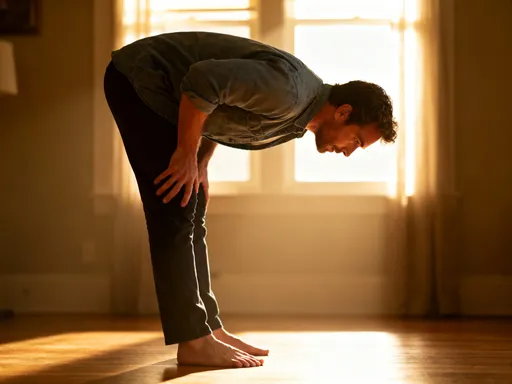
Yoga entered my life as a solution for stiffness. At first, I practiced for flexibility — to touch my toes, ease my back, and feel more at ease in my body. But like many, I plateaued. Stretching helped, but the relief was short-lived. It wasn’t until I began studying TCM principles that my practice deepened. I started to see yoga not just as physical exercise, but as a way to influence energy flow. This subtle shift changed everything. Instead of pushing into poses, I learned to move with awareness, timing, and breath — elements central to both yoga and TCM.
One key insight was the importance of timing. TCM teaches that energy flows through meridians in a 24-hour cycle, with different organs most active at specific times. For instance, the Liver meridian is strongest between 1 a.m. and 3 a.m., which explains why some people wake during this window when stressed. Applying this knowledge, I began practicing gentle yoga in the morning to support the Lung and Large Intestine meridians, associated with elimination and clarity. Evening sessions focused on calming poses to nourish the Heart and Kidney energies, promoting rest.
Breath and intention also transformed my experience. In TCM, breath is a direct tool for moving Qi. Shallow breathing, common during stress, restricts energy flow. By integrating deep diaphragmatic breathing into my yoga practice, I noticed not only greater flexibility but also a calmer mind and reduced tension. Poses once performed mechanically became meditative. The union of movement, breath, and mindful intention created a rhythm that felt supportive, not demanding. This was no longer just exercise — it was daily reconnection.
Simple Moves That Made a Real Difference
Not all yoga poses are equally effective for restoring balance. Some target muscles; others influence energy. I found that three simple postures, when practiced consistently, delivered the most noticeable relief. These are accessible to most women, regardless of fitness level, and can be done at home with minimal space.
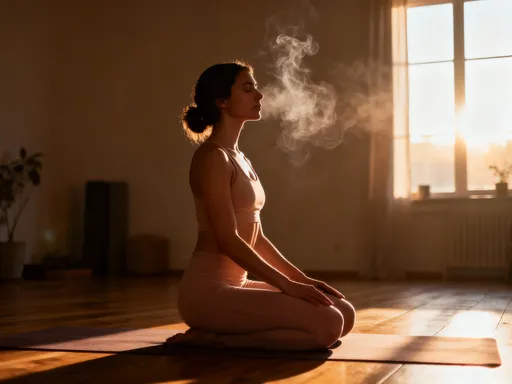
The first is Child’s Pose (Balasana). This gentle forward bend stretches the lower back, hips, and thighs while encouraging introspection and release. In TCM, this pose supports the Kidney meridian, which governs energy reserves and resilience. The Kidneys are considered the “root of life” — when they are weak, fatigue and low back discomfort often follow. Practicing Child’s Pose daily, especially in the evening, helped me feel more grounded. I would hold it for three to five minutes, focusing on slow, deep breaths, allowing tension to melt from my spine and pelvis.
Next is Cat-Cow (Marjaryasana-Bitilasana), a flowing sequence that mobilizes the spine and coordinates breath with movement. In TCM, the spine is a central channel for Qi, and the Liver meridian, linked to emotional flexibility, runs through the torso. Stiffness here often reflects emotional stagnation. Cat-Cow gently loosens this area, promoting both physical and emotional release. I practiced this for five to seven breaths each morning, noticing improved posture and a greater sense of readiness for the day.
The third pose is Legs-Up-the-Wall (Viparita Karani), a restorative inversion that requires only a clear wall space. By lying on the floor with legs elevated, circulation is gently redirected, and the nervous system shifts toward relaxation. TCM associates this pose with calming the Heart and Shen (spirit), making it ideal for those who struggle with racing thoughts at night. I used it before bed, often with a light blanket and soft lighting, and found it significantly improved sleep quality. The key, I learned, was consistency — 10 minutes daily yielded better results than an hour once a week.
Breathwork: The Overlooked Bridge Between Yoga and TCM
While poses get attention, breathwork is the quiet engine of healing. In both yoga and TCM, breath is not just a function of survival — it is a tool for transformation. Shallow, chest-dominant breathing, common in stressful environments, keeps the body in a state of low-grade alertness. This restricts Qi flow and reinforces tension. Deep abdominal breathing, by contrast, signals safety to the nervous system, slows the heart rate, and supports organ function.
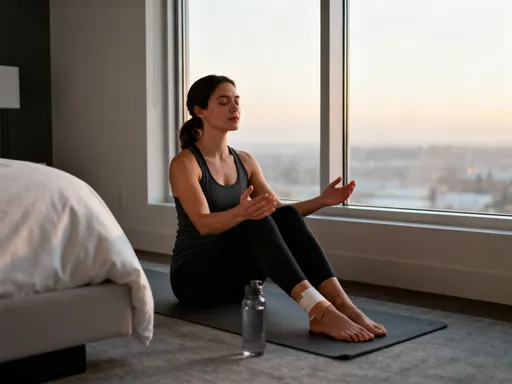
The technique I adopted was simple: 4-6 breathing. Inhale through the nose for a count of four, allowing the belly to rise; exhale slowly through the nose for a count of six. The extended exhale activates the parasympathetic nervous system, promoting relaxation. I began practicing this for five minutes each morning and evening, sometimes while seated, sometimes in bed. Within two weeks, I noticed a reduction in daytime tension and fewer nighttime awakenings.
What surprised me most was how breath enhanced my yoga practice. I no longer needed to force myself into poses. With each deep breath, my body softened, and my range of motion increased naturally. Breath became the guide — when it became strained, I eased back; when it flowed smoothly, I knew I was in the right place. This taught me an essential lesson: recovery is not about pushing harder, but about moving with greater awareness. In TCM, this is known as “nourishing Qi” — not depleting it through effort, but cultivating it through rhythm and ease.
Lifestyle Tweaks That Boosted My Progress
Physical practice alone wasn’t enough. Lasting change required adjustments in daily habits. One of the most impactful was aligning my routine with natural body rhythms. I began waking earlier to catch morning sunlight, which helps regulate circadian cycles and supports adrenal health. I also shifted my bedtime earlier, aiming for 10 p.m., in line with TCM’s emphasis on deep rest during the Liver’s cleansing phase.
Dietary changes, guided by TCM principles, also made a difference. I reduced cold and raw foods — such as smoothies and salads — especially in the morning, when the digestive fire (Spleen Qi) is weakest. Instead, I favored warm, cooked meals like oatmeal, soups, and steamed vegetables. This simple shift improved digestion and reduced bloating. I also limited caffeine after noon, which helped stabilize energy and prevent the afternoon crash.
Another small but powerful habit was walking after meals. Just 10 to 15 minutes of gentle movement supported digestion and prevented post-meal sluggishness. I often walked in nature, which compounded the benefits — fresh air, green space, and rhythmic movement all support Qi flow. These changes didn’t feel restrictive; they felt like acts of care. Over time, they became automatic, reinforcing a lifestyle that supported, rather than drained, my energy.
What Science Says — And What It Doesn’t (Yet)
While personal experience is powerful, it’s important to consider what research tells us. Scientific studies have increasingly validated the benefits of yoga for chronic pain, particularly in the lower back, neck, and joints. Randomized trials show that regular yoga practice can reduce inflammation markers, improve flexibility, and enhance balance — all critical for long-term mobility. It has also been shown to lower cortisol levels, improve sleep quality, and reduce symptoms of anxiety and depression.
Breathwork, too, has gained attention. Clinical studies support the use of slow, diaphragmatic breathing for reducing blood pressure and improving heart rate variability — a marker of nervous system resilience. Practices like the 4-6 breathing technique I used align with evidence-based methods for managing stress and promoting relaxation.
However, research on Traditional Chinese Medicine remains more limited, particularly in Western medical frameworks. While acupuncture has been widely studied and is recognized for pain relief, concepts like Qi and meridians are not yet measurable by conventional instruments. This doesn’t mean they are invalid — many holistic systems operate beyond current scientific detection. What matters is that people report real improvements when applying these principles. The growing field of integrative medicine acknowledges that healing often involves both measurable and experiential dimensions. Science may not yet explain everything, but it doesn’t have to — as long as the approach is safe and supportive.
Conclusion: Healing Is Not a Sprint — It’s Daily Alignment
Looking back, the most profound change wasn’t the disappearance of aches — though that happened — but the return of a quiet sense of well-being. Energy levels stabilized. Moods brightened. Daily tasks felt less taxing. This wasn’t achieved through extreme measures, but through small, consistent choices: a few minutes of yoga, mindful breathing, earlier nights, warmer meals. Healing, I’ve learned, is not a dramatic event. It is a daily practice of alignment — with the body, the breath, and the natural world.
If you’re feeling worn down, know that you don’t need to overhaul your life to feel better. Start with one pose. Try one breathing cycle. Notice how your body responds. The goal isn’t perfection, but presence. Listen to your body’s signals. Honor its need for rest, movement, and rhythm. These are not luxuries — they are necessities.
Finally, remember that this approach is not a substitute for medical care. If you experience persistent pain or health concerns, always consult a qualified healthcare provider. But for everyday discomfort — the stiffness, fatigue, and mental fog that come with modern life — integrating yoga and TCM principles can offer a gentle, sustainable path forward. True wellness isn’t about fixing yourself. It’s about remembering how to live in balance. And that, perhaps, is the most healing practice of all.